Special Contribution: How Japanese companies can effectively serve humans and machines in the age of AI search
Looking ahead to 2027, Japanese companies must achieve two increasingly important corporate communications goals:
- First, they must ensure that when investors, customers, partners and other stakeholders use Google, ChatGPT and other AI search tools to ask questions about their company, it is their content, rather than third-party sources outside their control, that feeds the answer.
- Second, they must make their websites highly attractive destinations for these human stakeholders, which genuinely provide a rich and meaningful experience above and beyond the AI search answer.
The good news is that there are three strategies that Japanese companies can adopt to achieve both goals at the same time:
- Own the narrative
- Amp up authentic humanity
- Create useful online experiences
Here are investor relations, sustainability and corporate communications best practice examples of these strategies in action.
Owning the narrative
If you don’t tell your company’s story fully and factually on your website, AI search platforms will cobble together an alternate version, from sources outside your control.
So it’s vital to make your website the “mothership of truth” about all relevant topics for your business and its stakeholders. Keys for doing this include:
- Offering comprehensive FAQs that provide clear, evidence-based answers to all common questions about your company.
- Publishing informative magazine-style “explainers” that provide authoritative information about the company’s areas of expertise.
- Date-stamping all time-sensitive information, to give AI platforms (and humans) clear signals that the content is up to date and therefore relevant.
Investor relations best practice example
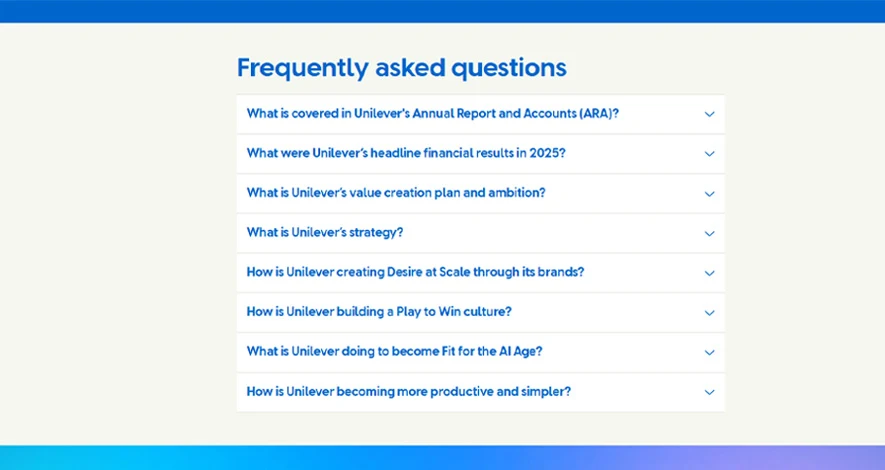
Unilever provides FAQs on the annual report landing page of its global site – greatly increasing the chances that it will be the source of AI search answers, as well as being useful to investors directly visiting the site.
Sustainability best practice example
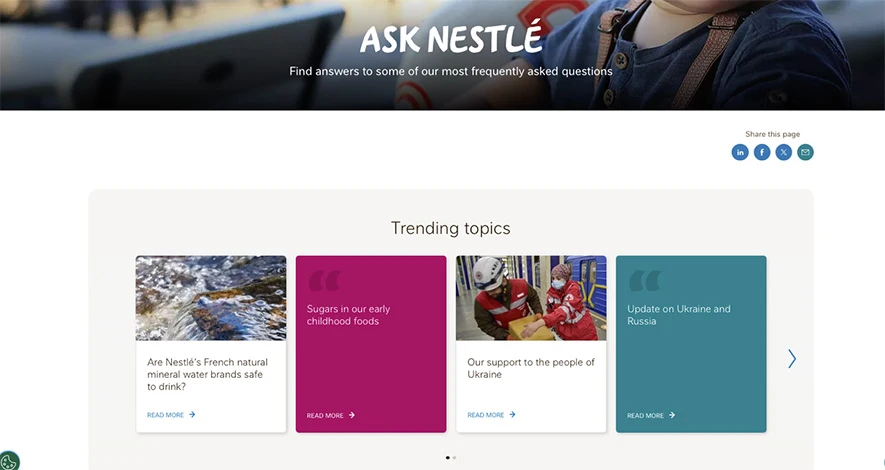
Nestlé’s global site has a dedicated main section titled “Ask Nestlé”. This provides clear, detailed, authoritative answers to a comprehensive range of questions about the company’s sustainability policies and practices. “Ask Nestlé” is proving highly successful at maximising AI search visibility, as well as being useful for human site visitors of all kinds – including investors, customers and others.
Amping up authentic humanity
People trust people more than institutions. Whether through social media posts, short-form video, podcasts or employee stories, audiences want to hear directly from leaders and experts, rather than anonymous corporate messaging.
These same signals are increasingly valuable in AI search, with Google and other AI platforms placing greater emphasis on authentic viewpoints and unique expertise.
Named authors, first-hand experiences, leadership commentaries and original insights help establish credibility with both human audiences and AI systems. The result is a virtuous circle: content that feels more human is increasingly the content that is discovered, trusted and cited.
Investor relations best practice example
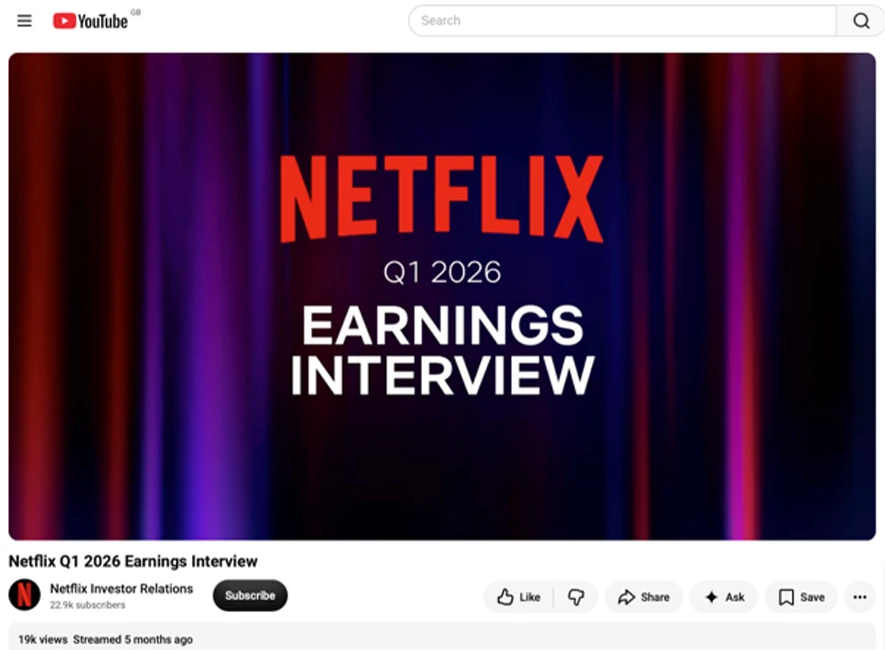
Netflix accompanies earnings announcements with conversational YouTube interviews, giving investors direct access to leadership thinking.
Corporate responsibility best practice example
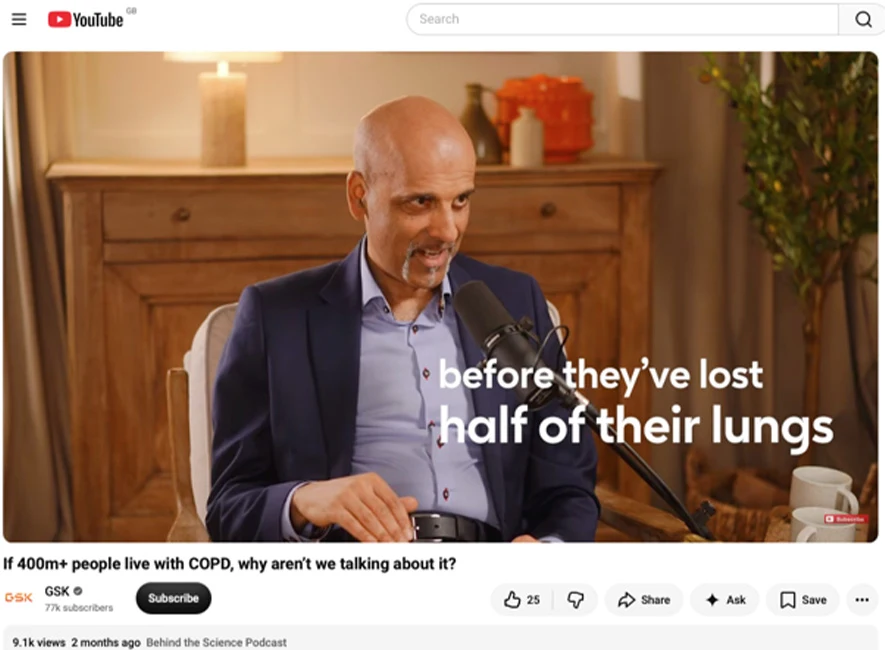
GSK has launched a “Behind the Science” podcast that brings together internal and external experts in conversations that will captivate humans and fuel AI searches:
Creating useful online experiences
The rise of AI search is having an impact on overall traffic to many websites. Yet there are also increasingly strong indicators that the people who do visit are staying longer and are more curious.
Research by Adobe has found that AI-referred visitors have 12% higher engagement compared to non-AI traffic.
Companies should meet this newfound enthusiasm by providing visitors features and tools that deliver truly engaging experiences.
Source: Adobe Digital Insights, “Quarterly AI Traffic Report,” April 2026.
Investor relations best practice example
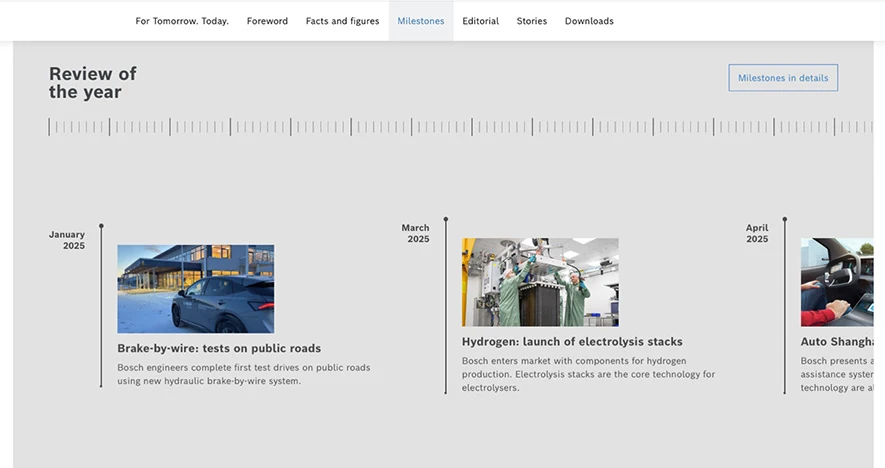
Bosch launched a “digital annual report experience” on its global website in April 2026, to accompany its PDF annual report. This provides an interactive timeline, multimedia articles, and other rich material about Bosch’s recent performance and future strategy.
Sustainability best practice example
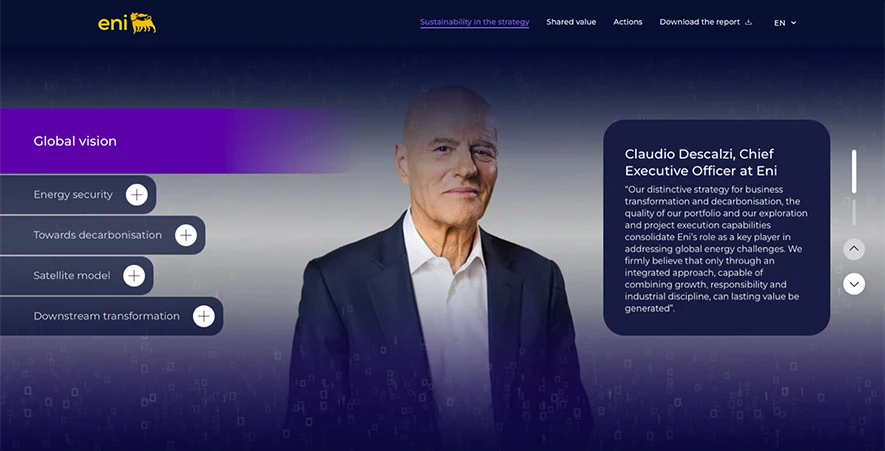
Eni distils highlights from its latest sustainability report into an HTML-based summary that is well rendered for both humans and machines.
You can download the full Bowen Craggs report on these three strategies here:
https://www.bowencraggs.com/the-index/index-snapshot/
Join us in Tokyo to discover how your company can put these strategies into practice
In November 2026, Mitsue-Links will host the Corporate Digital Communications Summit 2026, coinciding with a visit to Japan by me, Chief Executive of Bowen Craggs, plus my colleague Caterina Sorenti, Senior Consultant and Head of Editorial.
At the summit, we will share the latest global trends and best practices in corporate digital communications.
Alongside an overview of global developments, the summit program will focus on three areas of particular relevance to Japanese companies:
- AI search
- Investor communications
- Sustainability communications
The summit will also explore, from a practical perspective, how corporate websites can evolve as AI search becomes an increasingly important part of the information landscape.
The summit is designed to be more than a series of presentations about international best practice. Participants will have the opportunity to engage directly with experts from Bowen Craggs and Mitsue-Links, and to consider insights in the context of their own organization’s challenges.
For participants who wish to take the discussion further, five-minute individual feedback sessions with myself and Caterina Sorenti are also planned. During these sessions, participants can nominate a specific website and receive direct feedback from the experts.
The goal is not simply to understand what companies around the world are doing. It is to ask a more practical question: what does this mean for our organization and what should we do next?
Companies wishing to receive feedback as part of the individual consultation should apply by October 31, 2026. Registration for the summit is open until November 10, 2026.
For more information on our services, timeframes and estimates, as well as examples of our work, please feel free to be in touch.